[ad_1]
By Michael S. Derby
NEW YORK (Reuters) -Total household debt levels rose during the second quarter as a growing number of student loan borrowers and some newer home borrowers faced rising credit challenges.
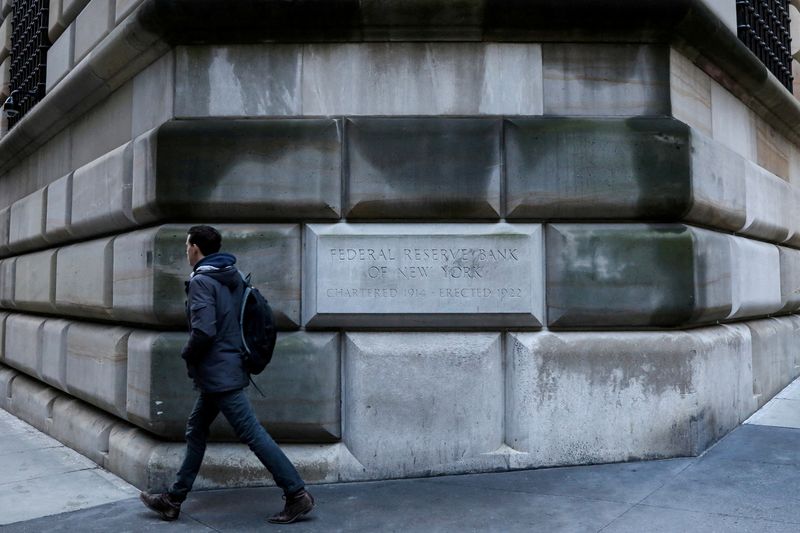
The Federal Reserve Bank of New York said on Tuesday as part of its latest Quarterly Report on Household Debt and Credit that overall borrowing during the second quarter increased $185 billion, or 1%, from the first quarter to $18.39 trillion. Housing-related credit, which makes up the bulk of borrowing in the U.S. economy, ticked up $131 billion to $12.94 trillion.
The report noted that the overall move of different types of debt into some type of delinquency was “elevated” during the second quarter, with 4.4% of overall borrowing hitting some level of delinquency, a very slight rise from what was seen in the first quarter.
The move into trouble status was “mixed” across borrowing types, the New York Fed said, with delinquent mortgages and home credit lines up “slightly” from the first quarter, with student loan woes up “sharply.” The rise in troubled student loans was not unexpected given the recent ending of the debt payback moratorium and the return of reporting troubled borrowing to credit agencies.
Some 10.2% of student borrowing is now 90 or more days delinquent, the report said. What’s more, New York Fed researchers expect the troubles for student borrowing to continue to rise.
Student loan borrowing challenges have been an ongoing issue for the overall economy as rising trouble there can impair other types of borrowing and cause lasting financial damage to those who are facing difficulties. During the second quarter total student loans were $1.64 trillion.
HOUSING FRICTION
The New York Fed report also delved into housing trends and found that against a solid overall landscape where borrowing has been bounded by strict credit standards, there are rising issues with loans from the Federal Housing Administration, which exists to help facilitate first-time borrowers.
“Despite the recent uptick in mortgage delinquency, overall mortgage performance remains strong by historical standards,” said Joelle Scally, an economic policy advisor at the New York Fed, in a press release.
That said, New York Fed researchers wrote in a blog post accompanying the debt report that FHA mortgages “have recently seen the steepest rise in delinquency rates, with transitions into 30 days past due exceeding four percent quarterly.” In terms of geography, they noted there were more troubled loans of this type in Southern states and Puerto Rico.
[ad_2]
Source link

